

A wry observation from Søren Kierkegaard:
“The majority of people are not only afraid of holding a wrong opinion, they are afraid of holding an opinion alone.”
A wry observation from Søren Kierkegaard:
“The majority of people are not only afraid of holding a wrong opinion, they are afraid of holding an opinion alone.”
Fifty-two years ago today, Miles Davis began recording Kind of Blue, the one jazz album owned by people who don’t like jazz. (And the one album that surely must vex atheists, as it clearly demonstrates the existence of a supreme being.)
Three of the five tracks were recorded March 2, 1959: “So What,” “Freddie Freeloader,” and “Blue in Green”; the remaining two—”All Blues” and “Flamenco Sketches”—were recorded seven weeks later.
As evidence of the album’s enduring appeal, here’s a 2010 treatment of “Blue in Green” from Ralph Towner and Paolo Fresu (ECM 2085):
[audio:https://helveticka.com/blog/wp-content/uploads/2011/03/05-Blue-in-Green1.mp3|titles=05 Blue in Green]There’s a certain segment of the population—you know who you are—that will positively swoon at the following sentence: Cthulhu Chick has compiled a list of H. P. Lovecraft’s favorite words.
I’m not sure which is more promising: that a list of words like “foetid,” “Nyarlathotep,” and “ululate” exists, or that somewhere out there is a girl who calls herself “Cthulhu Chick.”
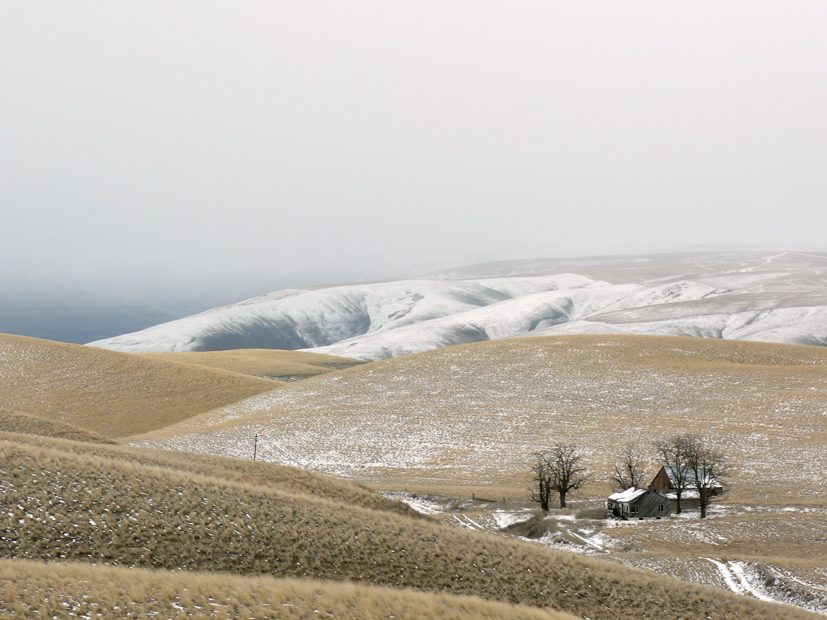
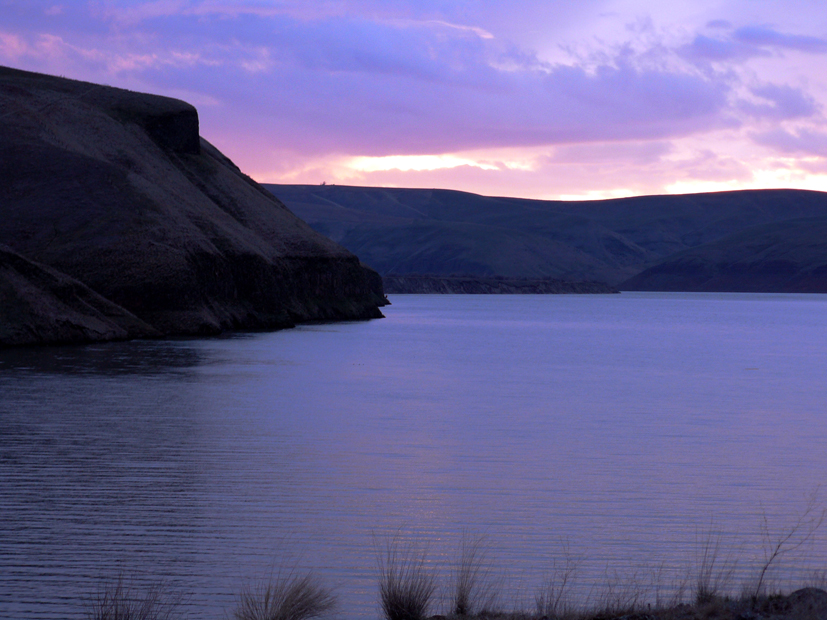
There are times when the beauty of this region is, quite simply, breathtaking. This weekend was one of those times.

Near East Hope, Idaho.

Highway 127, south of Dusty, Washington.

Snake River at Central Ferry, north of Dodge, Washington.
Allan Metcalf makes a persuasive case for “OK”—a word my great-grandmother forbade.
What began ten years ago as a low-paying gig writing snarky music reviews for an “alternative” weekly has led to a soon-to-be published short story. That’s right, folks: I can now add “author” to my resume. More details as they become available…
Over at City Journal, Clark Whelton, a former speechwriter for Ed Koch and Rudy Giuliani, tracks the decline and fall of American English. He reckons it began in 1985—the year I graduated from high school. Surely it’s just a coincidence.
And now, I present a brief tutorial on scoring and folding, compliments of Kit Hinrichs.
What with published authors arguing that stricter copyright laws are needed to produce another Shakespeare, Democratic lawmakers on the lam, and a rare book dealer suggesting that (gasp!) reading is overrated, one wonders whether the apocalypse is nigh. At least it’s Friday.
How’s about some balm for our troubled souls? From Consummation, the 1970 album by Thad Jones and Mel Lewis:
[audio:https://helveticka.com/blog/wp-content/uploads/2011/02/05-Us.mp3|titles=05 Us]Reading Garry Kasparov’s review of a new book about Bobby Fischer, I was reminded of William Hartston’s observation that “chess is not something that drives people mad; chess is something that keeps mad people sane.”
One of my favorite magazines talks about one of my favorite reference books. Here’s the money quote:
You don’t open A Dictionary of Modern English Usage to brush up on “sound linguistic principles” or to find out whether a phrase is common enough to be uncontroversial. You open it, rather, to consult the opinions of those whose understanding of the patterns of language is wider and deeper than your own, and who have a more sensitive ear for its rhythms and resonances. It’s true that languages mutate, and that grammatical “rules” aren’t “rules” in the ontological sense. But who cares? All you want to know is whether a particular usage is in accord with the habits of literate people.
This is an interesting project: Argentinean photographer Irina Werning “re-enacts” old photos—sometimes decades later—by placing their subjects in similar clothing, poses, and settings.
When I was a kid, I hoped I’d grow up to look just like Kent McCord from “Adam-12,” or, at the very least, like the guy who played John Gage in “Emergency!” As these photographs suggest, however, most of us end up looking pretty much the same.
Guess we can’t all win the genetic lottery.
More from the project here.
Today is the feast day of Maron of Syria. What that has to do with chocolates and flowers and revolting pastel candy hearts, I’ll never know.
In last week’s edition of Monday Miscellany, we had the occasion to mention Stephen Drury, the pianist, conductor, and tireless advocate of contemporary music. Do check out his website here, and, while you’re at it, pick up one or two of his CDs over at Amazon. Here’s a little taste, from the album John Cage: In a Landscape (Catalyst, 1995):
[audio:https://helveticka.com/blog/wp-content/uploads/2011/02/01-In-a-Landscape.mp3|titles=01 In a Landscape]Finally, if you’ve ever wondered how much information there is in the world, well…prepare to be dazzled.
The aim of proper punctuation is not just to blindly hew to a set of inflexible rules; it’s to clarify. In fact, that’s what grammar’s all about.
I bring this up because, as a sometime editor, I too often find myself defending old-school practices like hyphenating compound modifiers and adding the serial comma. It’s not that folks don’t understand. They just don’t see the point.
The point is, there’s simply no reason not to employ the serial comma. And there aren’t very many reasons not to hyphenate compound modifiers. But there’s one big reason why one should: it makes clear your intent. The easier it is for someone to read your writing, the greater the likelihood that it’ll actually get read.
Which is sort of why one writes. Isn’t it?
AbeBooks.com—a great resource, by the way, particularly for hard-to-find titles—just revealed its top 10 most expensive sales for January 2011.
At the top of the list is a 24-volume signed Joseph Conrad set, published in 1920 and limited to 735 copies. It sold for $13,823. An 1852 edition of Uncle Tom’s Cabin went for $12,302. So far, so good. But then things start to get surreal: number 3 on the list (at $11,971) is the complete seven-volume Harry Potter series.
Yeah, it’s signed by the author. And it’s “deluxe,” whatever that means. But c’mon. $12K for Harry Freakin’ Potter?!? Seriously?
As if to add insult to injury, Teddy Roosevelt’s Big Game Hunting in the Rockies and on the Great Plains—likewise signed—fetched only $8,125.
The complete list is here.